
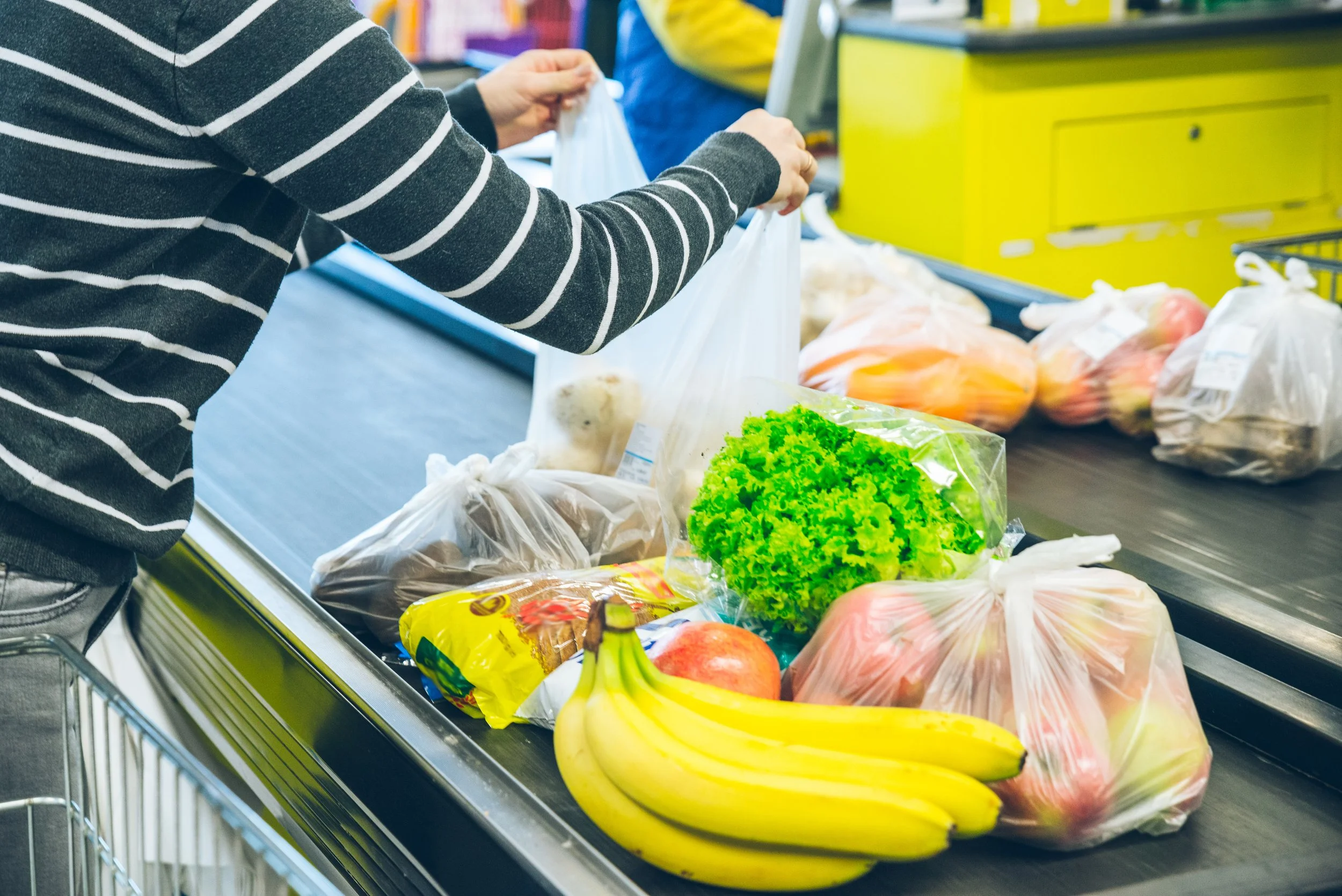
Every Sunday, Alyssa stands in line at her local grocery store, checking her SNAP balance on the ebtEDGE app and running the math in her head. This week, she has just enough to cover the cartful of essentials on the conveyor belt. Her one-year-old son babbles happily in the cart’s infant seat.
Alyssa is a single mother who works full time as a clerk at the local hardware store. Her minimum wage paycheck covers rent, utilities, and a week or two of groceries, but by the end of the month her budget is razor thin. SNAP keeps food on the table and leaves enough in the budget to fill her gas tank for the commute to work.
Alyssa's story is not unique. Across Washington, working families are struggling to keep their heads above water, and SNAP gives them room to stretch their budgets a little further. Unfortunately, a new federal proposal could change that.
On November 10th, the U.S. Department of Agriculture proposed a rule that would eliminate Broad-Based Categorical Eligibility, (BBCE), a policy that allows states to raise the income threshold for SNAP. Currently, over 40 states use BBCE to ensure more food-insecure families can get the help they need.
What is Broad-Based Categorical Eligibility?
The name of this policy is a mouthful, but the idea is simple. Federal rules set SNAP's income limit at 130% of the federal poverty line, and BBCE lets states raise that cap to 200%. BBCE also eliminates the asset test, meaning that resources like a car, a house, or money in a savings account don’t count against eligibility. This way, families can build towards financial independence without immediately jeopardizing their food benefits.
What Would Eliminating BBCE Mean for Washington?
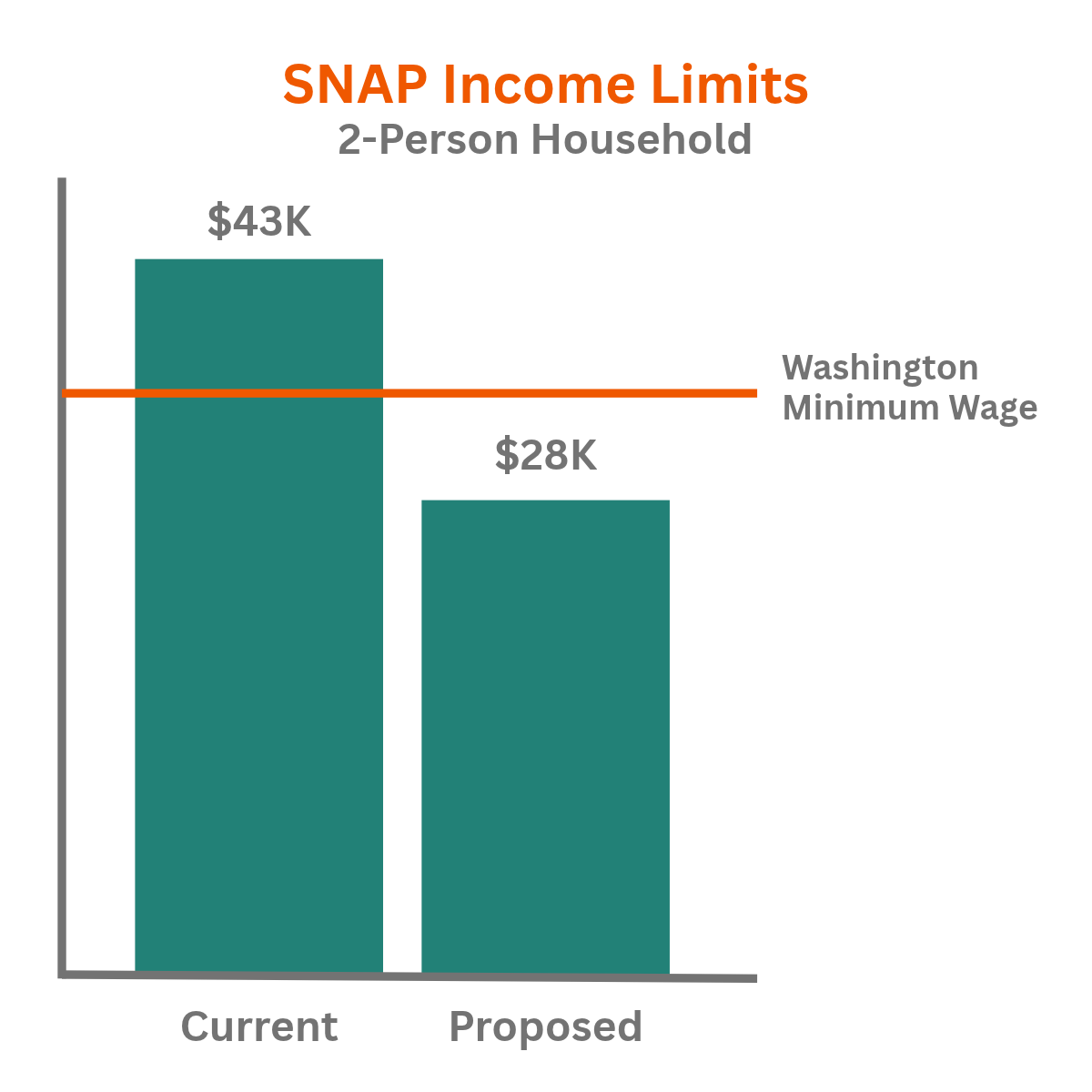
Currently, a two-person household in Washington can earn up to $43,280 a year and qualify for SNAP. Under the proposed rule, that cap would drop to $28,132 – a 35% decrease.
By the Trump Administration's own calculations, 6.3 million Americans, or nearly 18% of SNAP recipients, would lose their benefits.
Alyssa and her son would be two of them. Even as a single mom on a minimum wage paycheck, her income would be too high to qualify. The flexibility in her budget that SNAP provides would disappear, and she would have to choose which necessities to forgo.
The harm of this rule would ripple far beyond SNAP, because enrollment automatically qualifies households for other food assistance programs like WIC, SUN Bucks, and school meals. Under this rule, an estimated 1.78 million children nationwide would lose their streamlined eligibility for free school meals.
Communities would feel the crunch too. Schools would accrue more unpaid meal balances. Food banks, which are already stretched thin, would see more people at their doors. Local grocers would lose the SNAP dollars that customers spend every month, which hurts small businesses in the neighborhoods that can least afford it.
Washington families cannot afford to lose BBCE – especially after last year’s H.R. 1 SNAP cuts, which have already led to 81,000 Washingtonians losing their food benefits.
Take Action
This rule is a proposal, not a done deal – and your voice matters. Public comments become part of the official record and must be considered before the rule is finalized. Submit a comment today and urge the USDA to protect SNAP by upholding BBCE.
Not sure what to write in your comment?
Share a story of your personal experience with SNAP, or how SNAP helped someone you know.
Share how your family, or families in your community, are struggling to afford basic necessities.
Share about how important free school meals are for your family or your community – and that eliminating BBCE will decrease free school meals access.
Request action - ask that USDA withdraw this harmful rule.