
Partner Resources > School Breakfast
Kids do best when they eat breakfast.
School districts can increase access to school breakfast with Breakfast After the Bell.
Students can’t grow, learn, and thrive when they start the day on an empty stomach. School breakfast is an invaluable resource for Washington students, but when it is served in the cafeteria before school, stigma, logistics, and a chaotic experience prevent kids from actually eating.
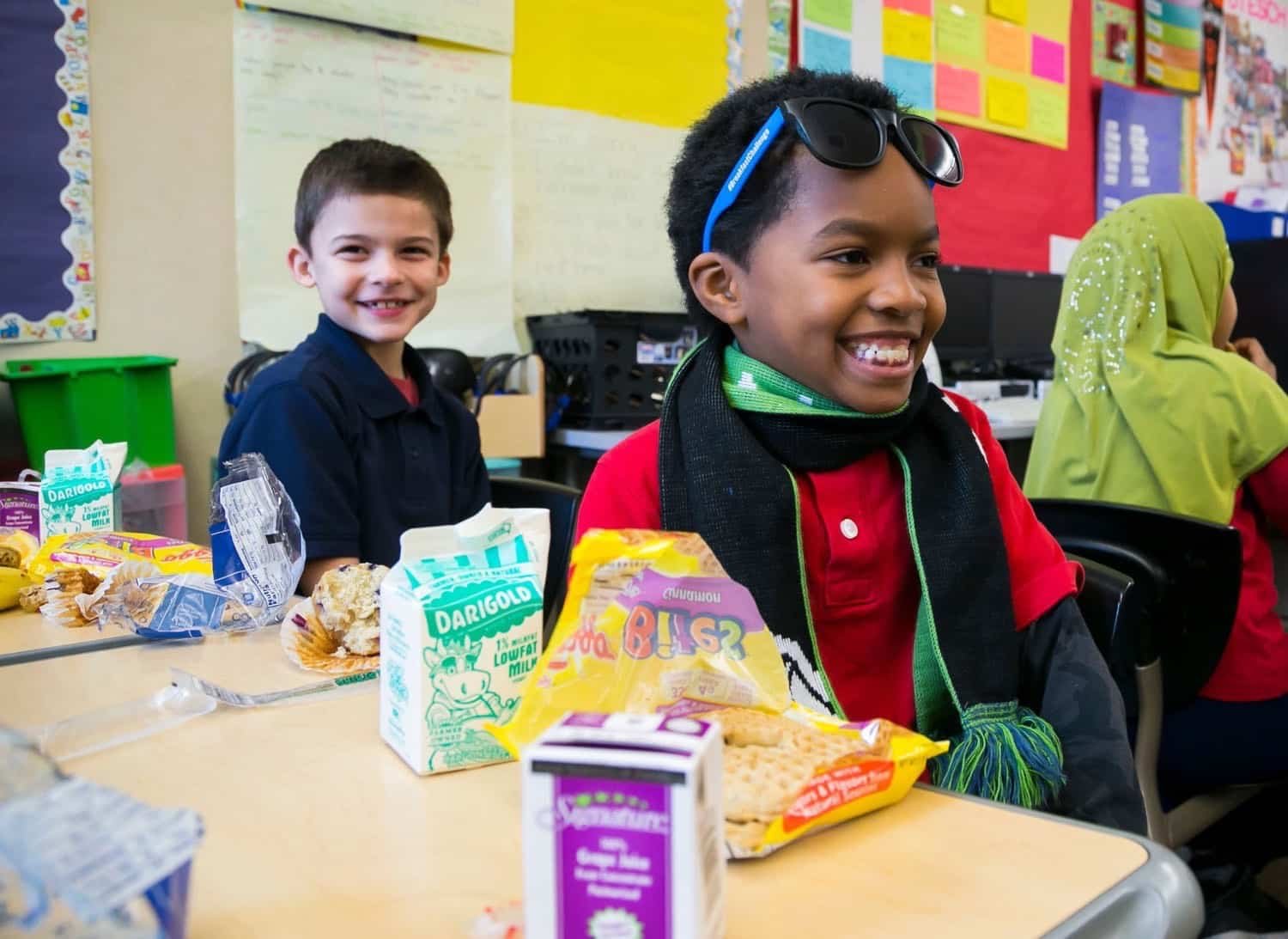
Breakfast After the Bell is an innovative approach to serving school breakfast that maximizes participation. Instead of breakfast being served before school, all students have the opportunity to access and eat a healthy breakfast alongside their peers, after the start of the instructional day.
When breakfast is served during the school day, more students eat. Serving meals in the classroom also:
Removes the stigma associated with eating breakfast in the cafeteria.
Eliminates the need for students to choose between participating in before school activities with their peers or starting the day with a healthy breakfast.
Prevents hectic morning schedules from resulting in a missed meal.
Breakfast After the Bell promotes racial equity.
Black, Indigenous, and students of color are disproportionately impacted by hunger due to the impacts of structural racism. Breakfast After the Bell levels the playing field by ensuring the students with the fewest resources and highest hurdles to education start their day with the morning nutrition they need for focus, attendance, health, and emotional wellness.
This has long-term implications, as students who eat school breakfast tend to do better in school and attend class more frequently, leading to greater job-readiness and self sufficiency after high school.
See Breakfast After the Bell in action with this video from the Office of the Superintendent of Public Instruction.
What does Breakfast After the Bell look like?
Breakfast in the Classroom
Meals are packed by classroom into insulated carts. At the beginning of the school day, carts are delivered to each classroom where breakfast is served and students eat as the instructional day begins. Participation in this model averages 88%.
Grab and Go
Breakfast kiosks loaded with meals are placed in high-traffic areas of a school. On their way to the classroom, students pass through a breakfast station where they may pick up a meal to eat in their classroom as the instructional day begins.
Second Chance
Students have two options for accessing breakfast each morning: before school (either traditional cafeteria service or Grab and Go) or during a Second Chance Breakfast available during a passing period or break later in the morning.
Let’s talk about BAB implementation.
Breakfast After the Bell increases participation in school breakfast and feeds more students when implemented effectively.
-
To break down the barriers to students accessing breakfast, Washington state passed legislation in 2018 mandating schools with 70% or more free and reduced-price students (or a claiming percentage of 70% or more if operating the Community Eligibility Provision) to offer Breakfast After the Bell.
Each year, the Office of the Superintendent of Public Instruction (OSPI) releases an updated list of schools mandated to implement BAB the next school year. Refer to the list of BAB mandated schools for the 2026-2027 school year.
Schools or districts that are not mandated are encouraged to offer BAB to increase access to breakfast for their students.
-
BAB does not mean serving traditional breakfast to students arriving on time and providing a Grab and Go option for late arrivals. Schools must encourage ALL students, regardless of when they arrive at school, to eat breakfast during the first part of the instructional day. Best practice is to eliminate the traditional before-school option when serving Breakfast in the Classroom or Grab & Go.
Additionally, breakfast stations should not be in a front office or other out-of-the-way location. All students should be led through the breakfast line by a teacher or staff member where possible, and should at minimum conveniently pass by a breakfast station or kiosk.
-
Per Washington State law, breakfast counts as instructional time as long as instructional activities are provided concurrently with the consumption of breakfast. Students usually take 10-15 minutes to eat their breakfast, including clean-up time. Teachers typically spend this time taking attendance, going over homework, or starting the day with social-emotional learning.
Teachers frequently report gaining instructional time due to fewer behavioral disruptions, nurse visits, reduced tardiness, and absenteeism. Because kids are consistently accessing breakfast with BAB, they are able to start their days with full stomachs and the ability to concentrate.
-
With a smart system that involves school staff and custodians as well as appropriate equipment and training, principals and teachers report that BAB becomes a seamless part of the morning routine and is much cleaner than expected.
With appropriate planning and clear procedures, even the youngest grade levels are able to properly clean up their desks after breakfast. Something as simple as a separate trash can for breakfast trash can make a big difference.
Having food in the classroom can be an overwhelming process for some. Luckily, schools across the state and nationwide have already gathered best practices. Contact us for support in developing your BAB plans.
Washington Kids Ready to Learn Act
In 2018, the Washington State legislature passed the Washington Kids Ready to Learn Act, mandating that certain high-poverty schools implement Breakfast After the Bell.
Currently, over 800 schools in Washington are required to implement Breakfast After the Bell. In the 2025-2026 school year, 822 schools will be impacted by this legislation, including 37 schools newly required to implement BAB. See if your school is mandated for BAB here. We’re here to help if you need it.
Resources for Schools
For Food Service Directors:
Breakfast After the Bell implementation toolkit.
For Principals and School Administrators:
Breakfast After the Bell 101 guide.
One-to-One Support
We’re here to support as you implement Breakfast After the Bell. We can help you identify the best model for your schools and bring stakeholders onboard. We also have funding available to support equipment purchases.
Schedule time to connect with our team or email schoolbreakfast@uwkc.org.
Learn more about school breakfast access.
The No Kid Hungry Center for Best Practices hosts webinars on a range of topics, from serving meals in the classroom to navigating supply chain disruptions.